Terminal Overview
 This page is currently only available in English.
At Nexi Switzerland, we provide a range of payment terminals to match different merchant needs, business sizes, and operating models. Not every merchant requires the same type of device. A small café with a single checkout has different needs than a retail chain with integrated cash register systems, and both differ again from self-service environments such as vending or parking.
Our terminal portfolio supports a variety of use cases, from simple standalone acceptance to integrated and unattended setups. The goal is to ensure that each merchant is equipped with the terminal type that best fits their operational flow, physical environment, and technical requirements.
Terminal Vendors
At Nexi Switzerland, we currently source terminals from two main vendors:
- Ingenico
- CCV (PAX)
These vendors provide devices for different merchant needs and terminal categories. While the hardware and software platforms differ, all devices are selected to support the requirements of Swiss merchants.
Ingenico devices are a key part of our current and future terminal portfolio, especially in areas where modern Android-based user experiences and updated form factors are important.
CCV (PAX) devices also remain part of our estate and cover a wide variety of existing merchant setups, including unattended use cases.
Terminal Models Overview
This overview is intentionally high-level. More detailed information about the platforms, device capabilities, and configuration options is provided in the dedicated terminal pages.
Standalone
| Model | Vendor | PCI PTS | Connectivity | Printer |
|---|---|---|---|---|
| DX8000 | Ingenico | 6 | 4G/LTE, WiFi, Bluetooth, Ethernet (with base) | Yes |
| A77 | PAX | 5 or 6 | 4G/LTE, WiFi | No |
| A920 | PAX | 5 | 4G/LTE, WiFi, Bluetooth | Yes |
| Q80 | PAX | 4 or 6 | Ethernet, WiFi | Yes |
Integrated
| Model | Vendor | PCI PTS | Connectivity |
|---|---|---|---|
| RX5000 | Ingenico | 6 | Ethernet, WiFi |
| Q30 | PAX | 5 or 6 | Ethernet |
Unattended
| Model | Vendor | PCI PTS | Connectivity |
|---|---|---|---|
| IM15 | PAX | 6 | Ethernet, WiFi, optional 4G/LTE |
| IM30 | PAX | 5 or 6 | Ethernet, optional 4G/LTE |
Other terminals may still be supported, although the list above provides an overview of the main devices currently relevant within the Nexi Switzerland terminal portfolio.
Terminal Types
Payment terminals can generally be grouped into three main categories: standalone, integrated, and unattended. While all of them are designed to accept electronic payments, they differ significantly in how they are operated, what hardware they include, and how they interact with other systems.
Standalone Terminals
Standalone terminals are devices that can operate independently, without requiring a connection to a cash register or external POS software. In this setup, the merchant enters the amount directly on the terminal and the customer completes the transaction on the same device.
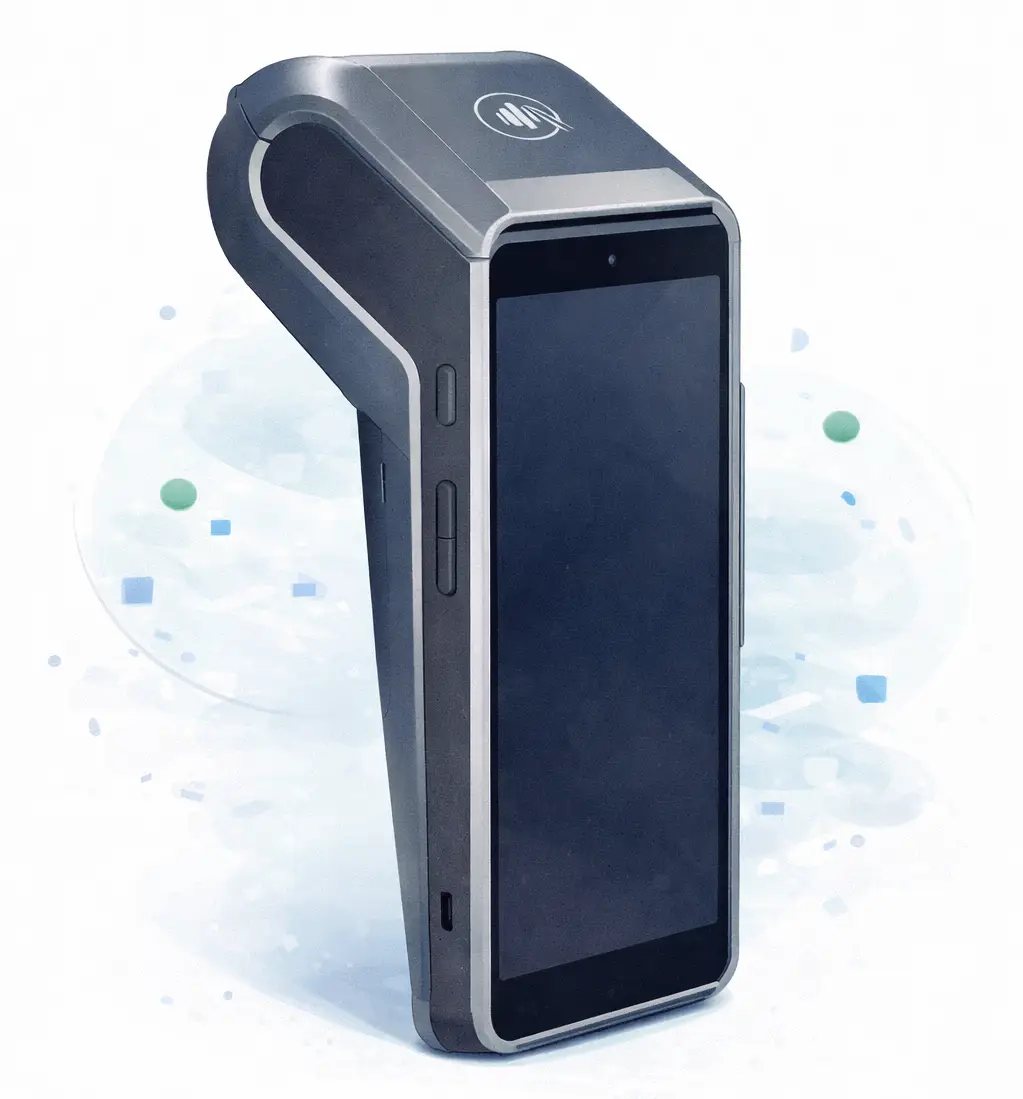
These terminals are typically used by smaller merchants, mobile businesses, hospitality environments, or any setup where ease of deployment and operational simplicity are important.
Depending on the model, standalone terminals may include:
- Built-in printer
- Touchscreen or keypad
- Battery for mobile use
- Wi-Fi connectivity
- GSM / 4G communication modules
- Bluetooth or USB connectivity
- Charging dock or countertop base
Standalone terminals are often chosen when the payment device should be ready to use with minimal setup and limited dependency on external systems. Some standalone terminals may still be used in fixed counter-based environments even if they are not mobile.
Integrated Terminals
Integrated terminals are connected to an external cash register, POS software, or business system. In this model, the payment amount is sent automatically from the external system to the terminal, and the terminal acts primarily as the customer-facing payment interface.
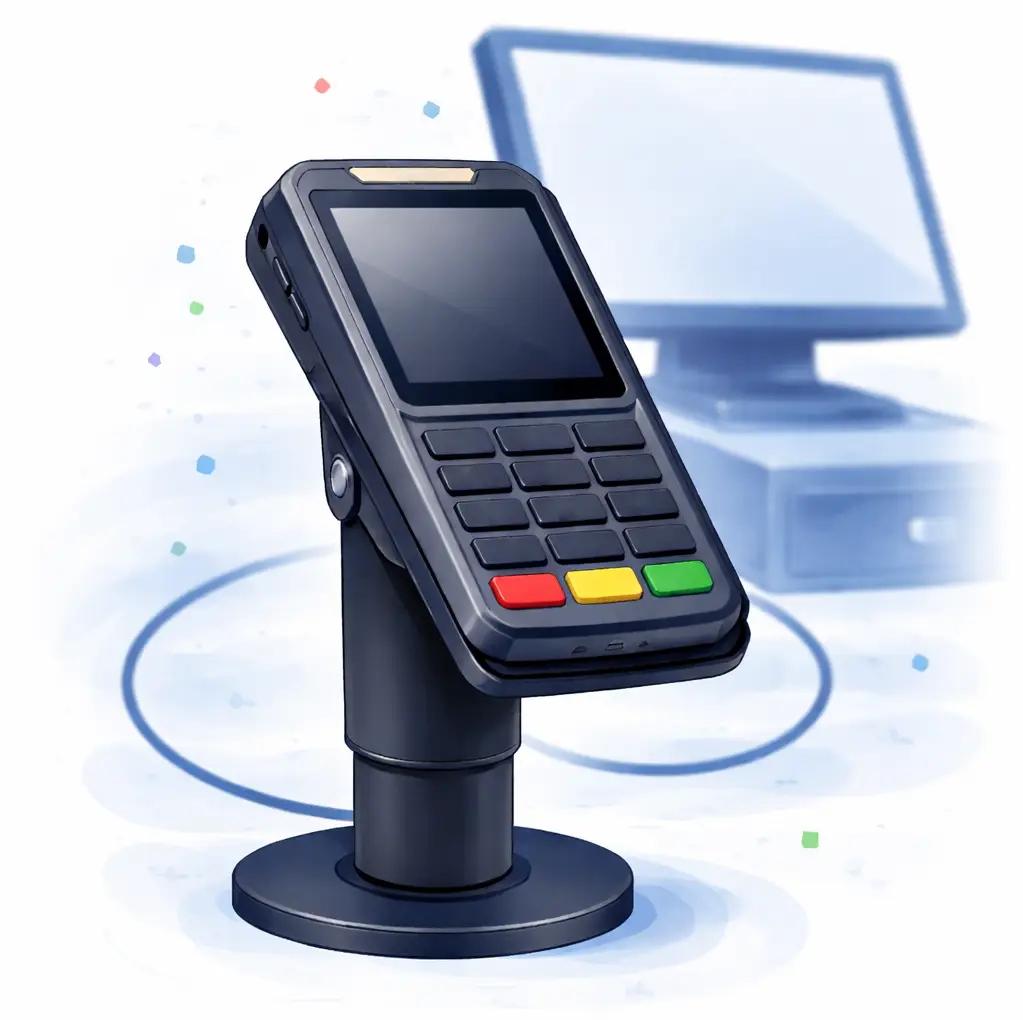
This type of setup is common in retail, structured hospitality, and larger merchant environments where manual amount entry should be avoided.
Integrated terminals may include features such as:
- Compact customer-facing form factor
- Printerless design, where the cashier system handles receipts
- Ethernet or serial communication
- USB or network-based integration
- Optional Wi-Fi connectivity
- Secure PIN entry and card reading optimized for fixed checkout setups
Because they are part of a broader checkout flow, integrated terminals are typically selected for environments with higher transaction volumes and stronger process automation.
Unattended Terminals
Unattended terminals are designed for self-service environments where no merchant staff is present during the transaction. The customer interacts directly with a machine, kiosk, or payment module.
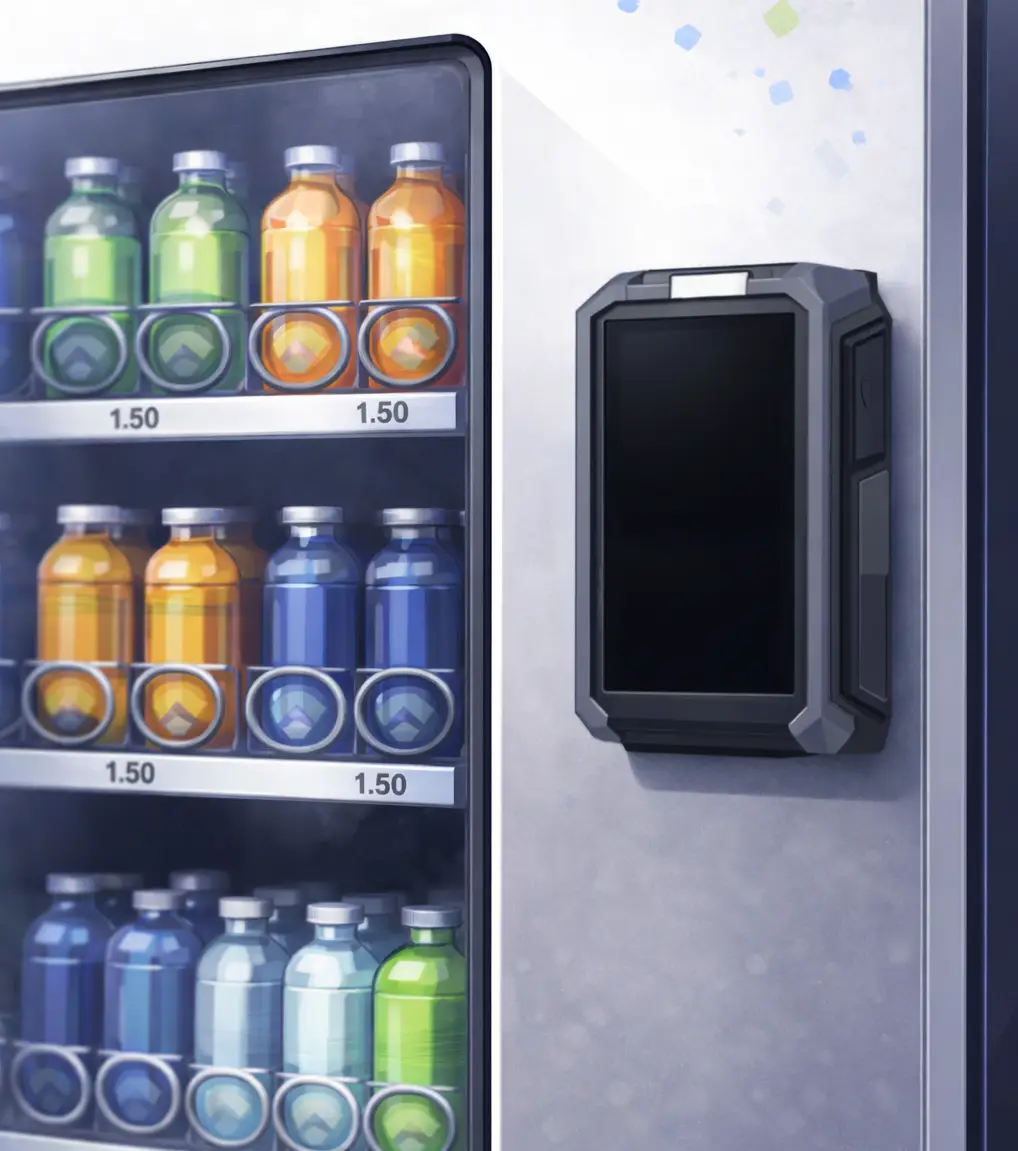
Typical use cases include:
- Vending machines
- Parking systems
- Ticketing machines
- EV charging stations
- Laundromats
- Access control or self-checkout environments
Unattended terminals are built for durability, security, and continuous operation. Depending on the model and installation scenario, they may include:
- Ruggedized housing
- Weather-resistant or industrial design
- Embedded communication modules
- MDB, USB, serial, or LAN interfaces
- Integration into kiosks or custom housings
These devices are not operated by store staff, but by end customers following the instructions of the host machine or interface.
Hardware and Certification Differences
Terminals also differ in their hardware generation and security certification level. One important element in this context is PCI certification, which defines the security standard for payment terminals.
Across terminal estates, it is common to find devices certified under different generations, such as PCI PTS 4, 5, or 6. Newer PCI generations generally bring updated security requirements and longer future support horizons. In practice, this means that within a portfolio, some models may exist in multiple PCI variants, while newer devices are already aligned to PCI PTS 6.
Accessories & Add-ons
Payment terminals can be complemented with a range of optional accessories depending on the merchant’s setup, environment, and usage patterns. These accessories are designed to enhance protection, usability, mounting, and branding, and may vary depending on the terminal model.
Typical accessory categories include:
- Protection & Handling: Cases, holsters
- Charging & Power: Charging bases, docking stations, power cables
- Mounting & Setup: Counter mounts, stack bases, fixed installations
- Consumables & Maintenance: Paper rolls, cleaning pads, battery replacements
- Branding & Customization: Stickers, foiling, and custom color options on request
Availability and compatibility depend on the specific terminal model. Standalone terminals generally offer a broader range of accessories than integrated or unattended devices.
EP2
In Switzerland, payment terminals are largely standardized through EP2. EP2 is a common interface and protocol that enables interoperability between terminals, acquirers, and service centers within the Swiss payment ecosystem. It ensures that terminals can be used across different acquirers and that communication follows a consistent and standardized structure.
Beyond communication, EP2 also defines a set of rules and conventions that influence how terminals behave in practice. Examples include:
- Transaction types and supported payment flows
- Card processing behavior and scheme interaction
- Terminal messaging and user interaction logic
- Reporting and closing processes
- Communication with acquiring and terminal management systems
In practice, the EP2 version on a terminal determines which specifications and features are supported within the EP2 framework. However, actual terminal capabilities also depend on the underlying hardware, operating system, and vendor implementation.
At Nexi Switzerland, we generally operate our terminal models on EP2 8.1.
Software Updates
To ensure security, stability, and ongoing compliance, our terminals may receive software updates from time to time.
Under normal circumstances, software updates are applied when the terminal is restarted and connected to the network. This allows updates to be deployed in a controlled manner and helps reduce disruption during business hours.
In exceptional cases, additional software updates may also be carried out during the day. This is generally limited to situations where payment acceptance, terminal stability, or operational continuity could otherwise be affected.
Such updates are usually communicated in advance. However, if a significant security threat or other critical risk is identified, Nexi may deploy updates without prior notice in order to protect the payment environment.